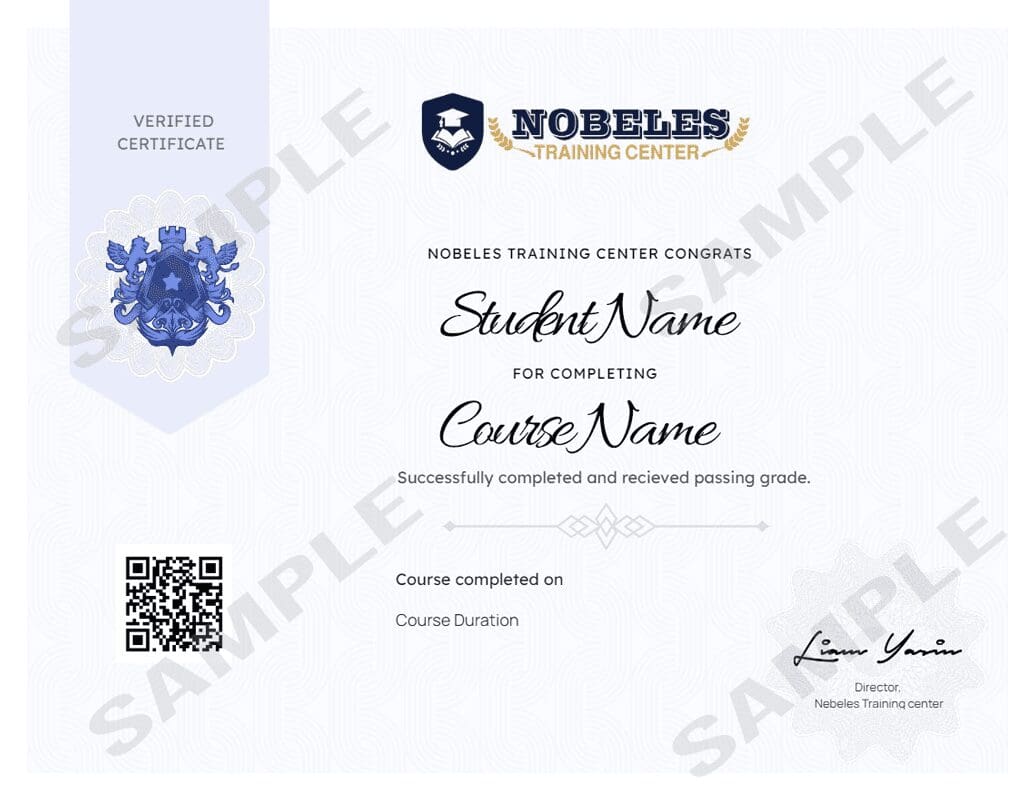
Description
Curriculum
Instructor
Performance Management is not a company’s way of employing “micro-managing†techniques that stunt the professional growth of its employees. Rather, it is a strategic approach to ensuring the efficiency and effectiveness of an organization. Whether at the organizational, departmental or employee level, the goal of performance management is to make sure all business goals are being met in a satisfactory manner.
Curriculum
- 11 Sections
- 0 Lessons
- 10 Hours
Expand all sectionsCollapse all sections
- The Basics (I)Performance management involves setting clear goals, providing regular feedback, conducting evaluations, and aligning employee objectives with organizational priorities. It fosters growth, accountability, and continuous improvement for individuals and teams.0
- The Basics (II)Effective performance management includes ongoing communication, recognizing achievements, identifying development needs, and implementing action plans. This approach enhances employee engagement, drives motivation, and contributes to overall organizational success.0
- Goal SettingGoal setting establishes clear, measurable objectives that align with organizational priorities. SMART goals—Specific, Measurable, Achievable, Relevant, Time-bound—drive focus, motivation, and accountability, enhancing individual and team performance.0
- Establishing Performance GoalsEstablishing performance goals requires collaboration and clarity. Involving employees in the process ensures alignment, fosters ownership, and creates realistic targets that enhance motivation and drive successful outcomes within the organization.0
- 360-degree Feedback360-degree feedback gathers input from multiple sources—peers, supervisors, and subordinates—providing a comprehensive view of performance. This holistic approach enhances self-awareness, fosters development, and drives continuous improvement in skills and behavior.0
- Competency AssessmentsCompetency assessments evaluate employees' skills and behaviors against defined standards. This process identifies strengths and development areas, guiding training initiatives and promoting career growth, ultimately enhancing organizational performance and effectiveness.0
- Kolb's Learning CycleKolb's Learning Cycle emphasizes experiential learning through four stages: Concrete Experience, Reflective Observation, Abstract Conceptualization, and Active Experimentation. This framework promotes continuous improvement and skill development by integrating experience with reflection and action.0
- MotivationMotivation drives employee performance and engagement. Understanding intrinsic and extrinsic motivators helps managers create supportive environments, set meaningful goals, and implement recognition strategies, fostering a culture of achievement and satisfaction.0
- The Performance JournalThe performance journal is a tool for documenting achievements, challenges, and reflections. It encourages continuous self-assessment, facilitates goal tracking, and promotes accountability, ultimately enhancing personal and professional development within the organization.0
- Creating a Performance PlanCreating a performance plan involves setting clear objectives, defining key performance indicators, and outlining action steps. This structured approach aligns individual contributions with organizational goals, ensuring accountability and guiding development for success.0
- Post TestPost Test0
Nobles Center

5 Students146 Courses